When will the market recover?
Nobody can hand you a date, and anyone who promises one is guessing. But history is clear on one thing: recoveries arrive faster than the fear that comes before them, and the people who wait in cash usually miss the turn.

No one can time the bottom and you do not need to.
Markets have recovered from every downturn so far, and the strongest days tend to cluster right at the turn, when fear is highest. You do not have to call the bottom. You just have to still be invested when it comes.
Why waiting for the bottom costs you.
Miss just a few of the market's best days, which almost always land in the middle of the scary stretch, and you can give up years of return. The investors who sell to wait for a clearer sky usually buy back in higher, after the recovery they were trying to avoid the risk of.
This is the quiet tax of fear: it feels like safety, but it shows up as a permanently smaller number at the end.
What the market is doing today.
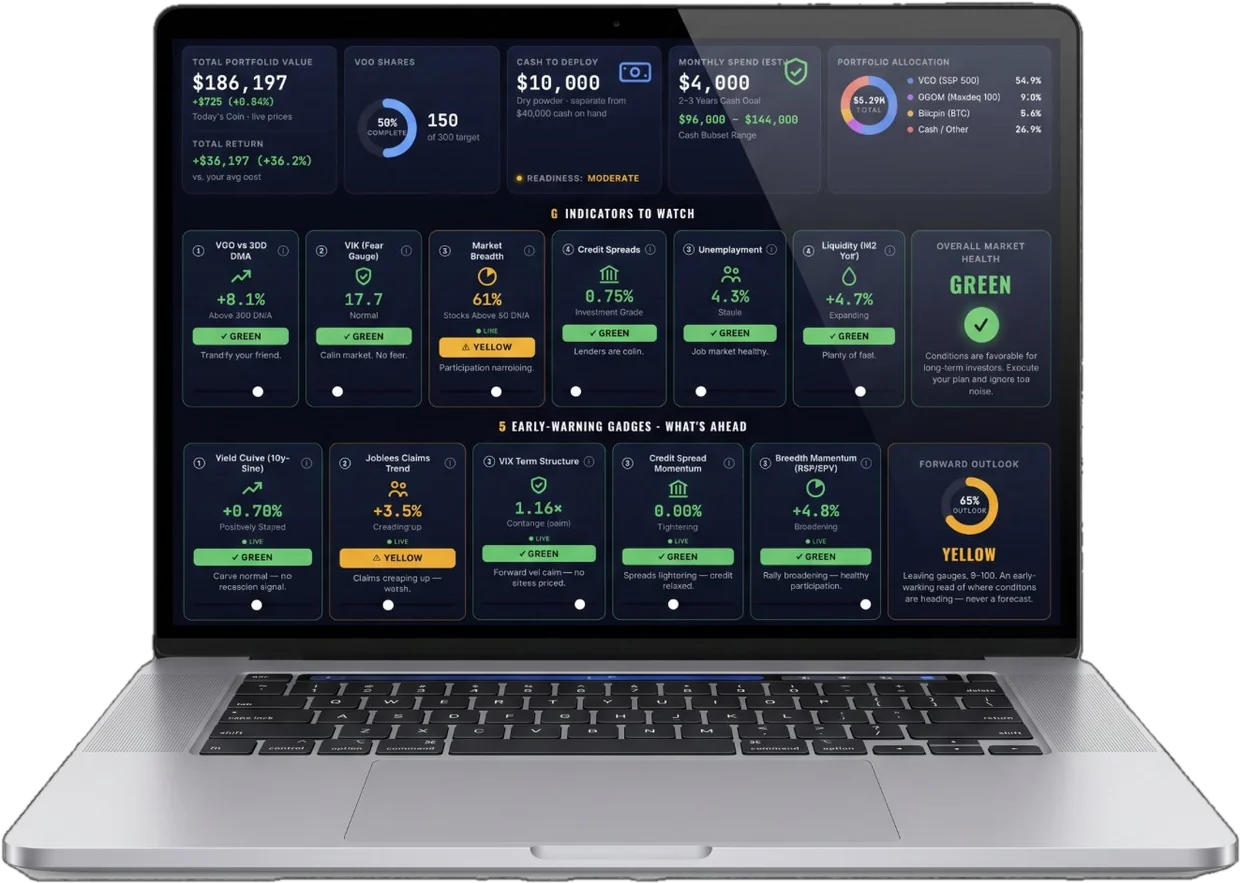
Rather than guess at a recovery date, look at the real condition of the market right now. The free Market Health Score reads the S&P 500 and the US economy into one number from 0 to 100, so you can see whether the foundation is healing or still under stress.
What to do while you wait.

- Keep your contributions running. Buying through the dip is how you own more shares for the recovery.
- Lean on your cash buffer for any near term spending so you are never forced to sell low.
- Ignore the date predictions. Nobody knows, and acting on a guess is how people get hurt.
- Check one honest number, then get on with your life.
Stop waiting for permission.
Let Mr. C watch the turn.
14.99 dollars per month or 149 dollars per year after the trial. Cancel anytime. No contracts.
Questions people ask.
How long do market recoveries usually take?
It varies widely and no one can predict it. What history shows is that recoveries have always come, and the sharpest gains tend to happen early, right when fear is highest.
Should I wait in cash until it recovers?
For most long term investors, no. Waiting in cash usually means missing the rebound and buying back in higher. Staying invested with a cash buffer for short term needs tends to work better.
Is this financial advice?
No. This is educational information and Mr. C is not a licensed financial advisor. Nothing here is personalized investment advice.