What is dollar cost averaging?
It is the simplest, calmest way to invest: put in the same amount on a regular schedule, no matter what the market is doing. Here is why it works, and why it beats trying to time the market.

Same amount, same schedule, always.
Dollar cost averaging means investing a fixed amount on a regular basis, say every payday, whether the market is up, down, or flat. You stop trying to guess the perfect moment and let consistency do the work.
Why it quietly beats timing.
When prices are high, your fixed amount buys fewer shares. When prices are low, the same amount buys more. Over time that means you automatically buy more when things are cheap and less when they are expensive, the opposite of what fear makes most people do.
It also removes the hardest part of investing: the decision. There is no brave moment to summon each month, because the plan already made it for you.
The same engine that runs your plan.
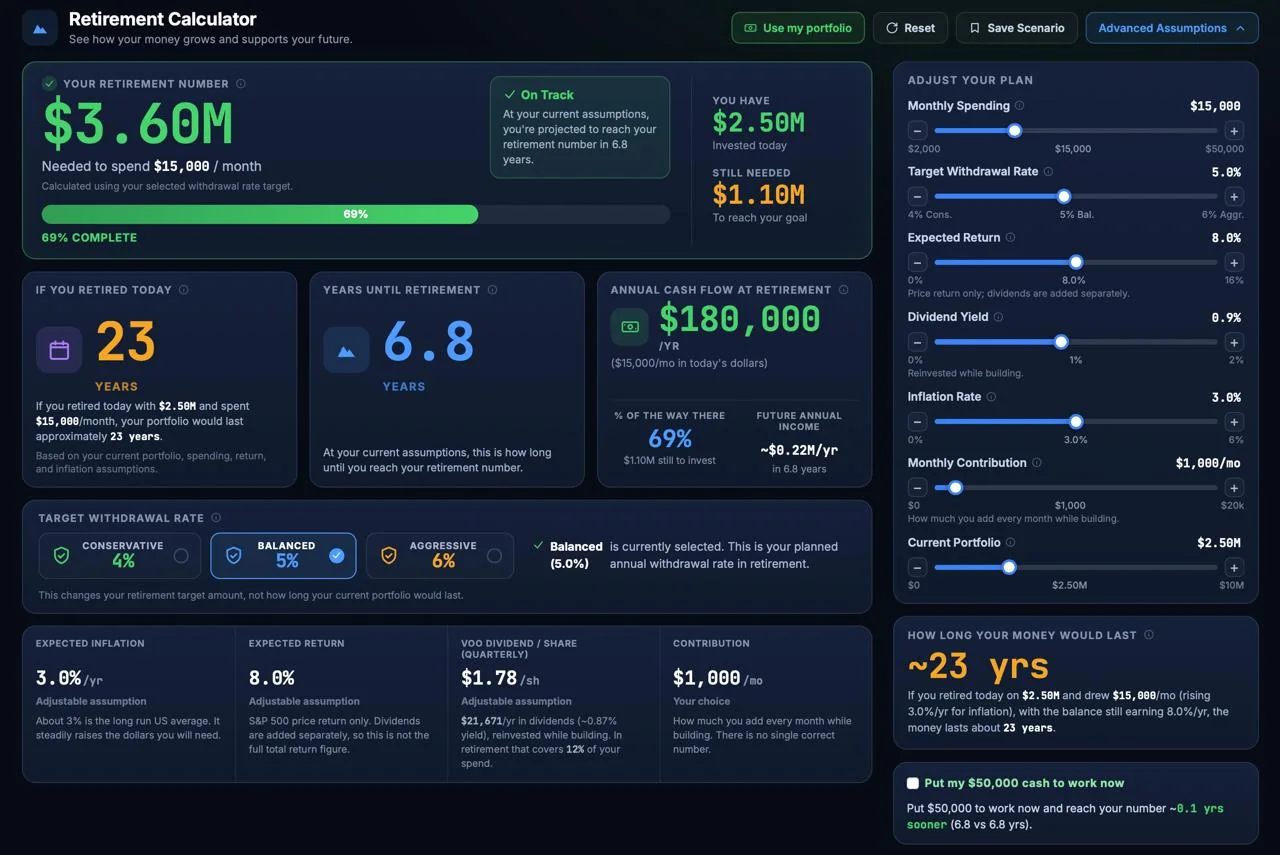
Inside Mr. C, your contributions and your timeline feed a live projection, so you can see exactly how steady investing builds toward your number. The market read sits right beside it, so calm and progress live on one screen.
How to start.

- Choose a fixed amount you can invest every month without stress.
- Automate it so it happens whether you feel brave or not.
- Do not pause it in a downturn. That is when your money buys the most.
- Check one honest number for context, then trust the plan.
Make calm investing
your default.
14.99 dollars per month or 149 dollars per year after the trial. Cancel anytime. No contracts.
Questions people ask.
Is dollar cost averaging better than investing all at once?
Lump sum often wins on paper over long periods, but dollar cost averaging wins on behavior: it keeps you invested through fear and removes the urge to time the market, which is where most people lose.
Should I stop dollar cost averaging when the market drops?
No. A downturn is when your fixed amount buys the most shares. Pausing in a dip is the opposite of what makes the strategy work.
Is this financial advice?
No. This is educational information and Mr. C is not a licensed financial advisor.