Should I sell my stocks right now?
For most long term investors, the honest answer is no, and probably not for the reason you are worried about. Here is the calm version, grounded in what the market is doing today, not the headlines.

Selling into the drop is usually the mistake.
If you are investing for a goal that is still years away, selling because the market dropped usually does more harm than the drop itself. You turn a temporary decline into a permanent loss, and you risk missing the recovery, which tends to arrive faster than anyone expects.
Why selling in fear usually backfires.
The market's best days have a habit of landing right next to its worst ones. Miss a small handful of those rebound days because you sold and stepped aside, and you can give up years of return. This is why study after study finds the average investor earns less than the funds they own. The gap is not the market. It is the timing, the buying high and selling low that fear drives.
The headlines are not on your side either. News makes money from your attention, and fear holds attention better than calm. Every red day becomes a crisis on the screen. For someone trying to retire on a steady plan, that noise is the real enemy, because it pushes you to act at exactly the wrong moment.
What the market is actually doing today.
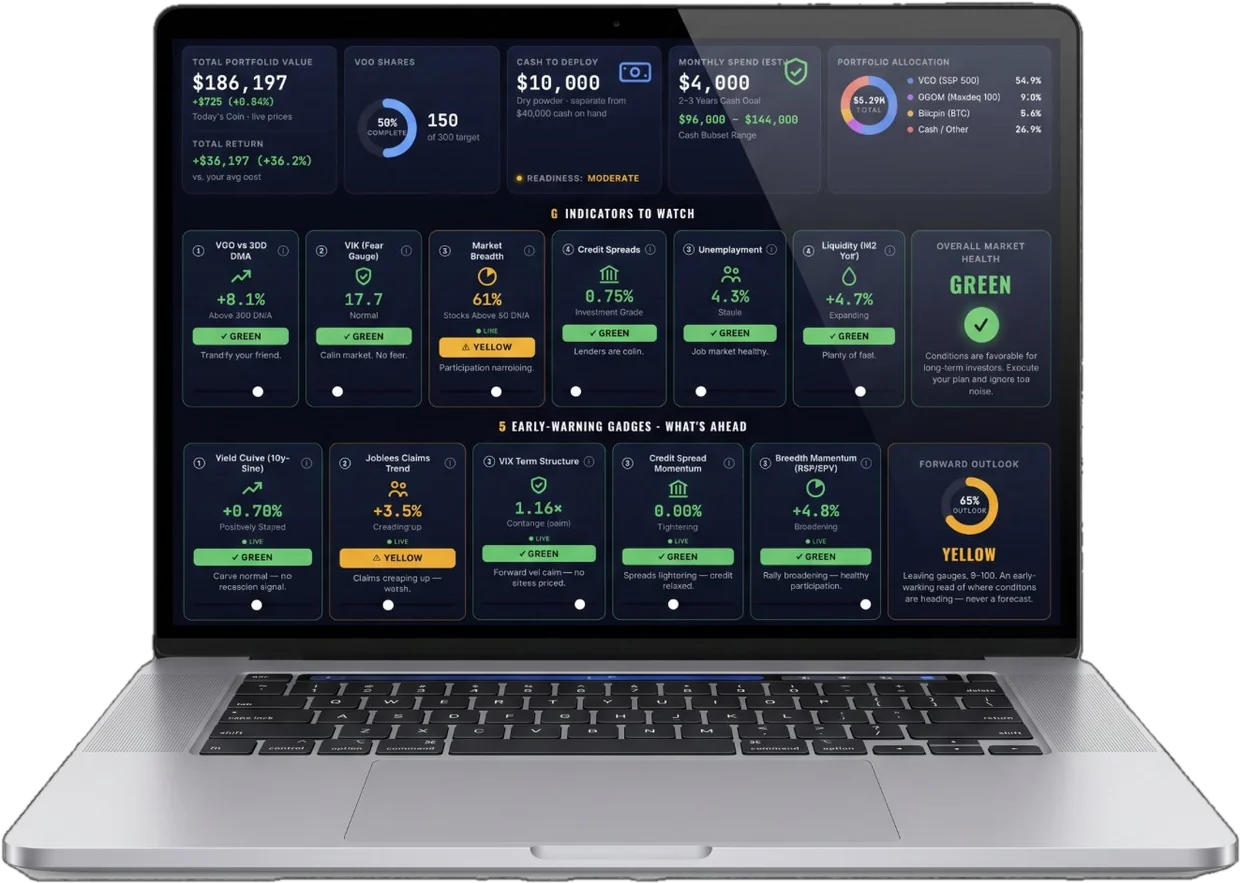
Decide with the real condition of the market, not a gut feeling. This number is live.
The free Market Health Score reads the S&P 500 and the US economy and turns it into one number from 0 to 100. Above 70 is green and healthy, 40 to 69 is yellow and mixed, below 40 is red and under stress. Check it before you make any move.
When selling might make sense.
There are times raising cash is reasonable. None of them are panic.
- You need the money soon. Cash you will spend in the next two or three years usually should not be in stocks in the first place.
- You are rebalancing on a plan. Trimming a position that grew too large, on a schedule you set in advance, is discipline, not timing.
- Your situation changed, not the market. A new goal or timeline can change your plan. A scary week should not.
What to do instead.

- Keep a cash buffer so you are never forced to sell stocks at a low to cover the bills.
- Keep your automatic investing running. Down markets are when steady contributions do their best work.
- Check one honest number, then close the app. Replace a hundred headlines with a single calm read and get on with your day.
Stop guessing on the scary days.
Let Mr. C read the market for you.
Every day Mr. C reads the market, tells you in plain English what it means for your plan, and gives you one clear next move so you stay calm and invested.
14.99 dollars per month or 149 dollars per year after the trial. Cancel anytime. No contracts.
Questions people ask.
What happens if I sell and the market goes back up?
That is the core risk. The best days often cluster right after the worst ones, so investors who sell in fear frequently miss the rebound and lock in a permanent loss. Timing the market tends to cost return, not protect it.
How do I know if it is a real risk or just noise?
Look at the actual health of the market, not the headlines. The Market Health Score reads six real signals and tells you whether the market is healthy, mixed, or genuinely under stress.
Is this financial advice?
No. This is educational information and Mr. C is not a licensed financial advisor. Nothing here is personalized investment advice. It is built to help you stay calm and informed.