Is the market crashing today?
Almost certainly not. Real crashes are rare. Most scary days are normal dips that feel like crashes because the headlines are loud. Here is how to tell the difference, with today's live read.

A red day is not a crash.
A crash is a fast drop of 20 percent or more, and it is rare. A dip of one to three percent in a day is normal and happens dozens of times a year. The market finishes higher far more often than lower. Today is far more likely a dip than a crash.
Dip, correction, or crash.
Three very different things the headlines lump together.
- A dip. A drop of a few percent. Completely normal and happens constantly. Most red days are this.
- A correction. A drop of 10 percent or more. Uncomfortable, but common, roughly once a year on average.
- A crash. A fast drop of 20 percent or more. Genuinely rare, a handful in a lifetime, and usually driven by real systemic stress, not a loud news day.
What a real crash actually needs.
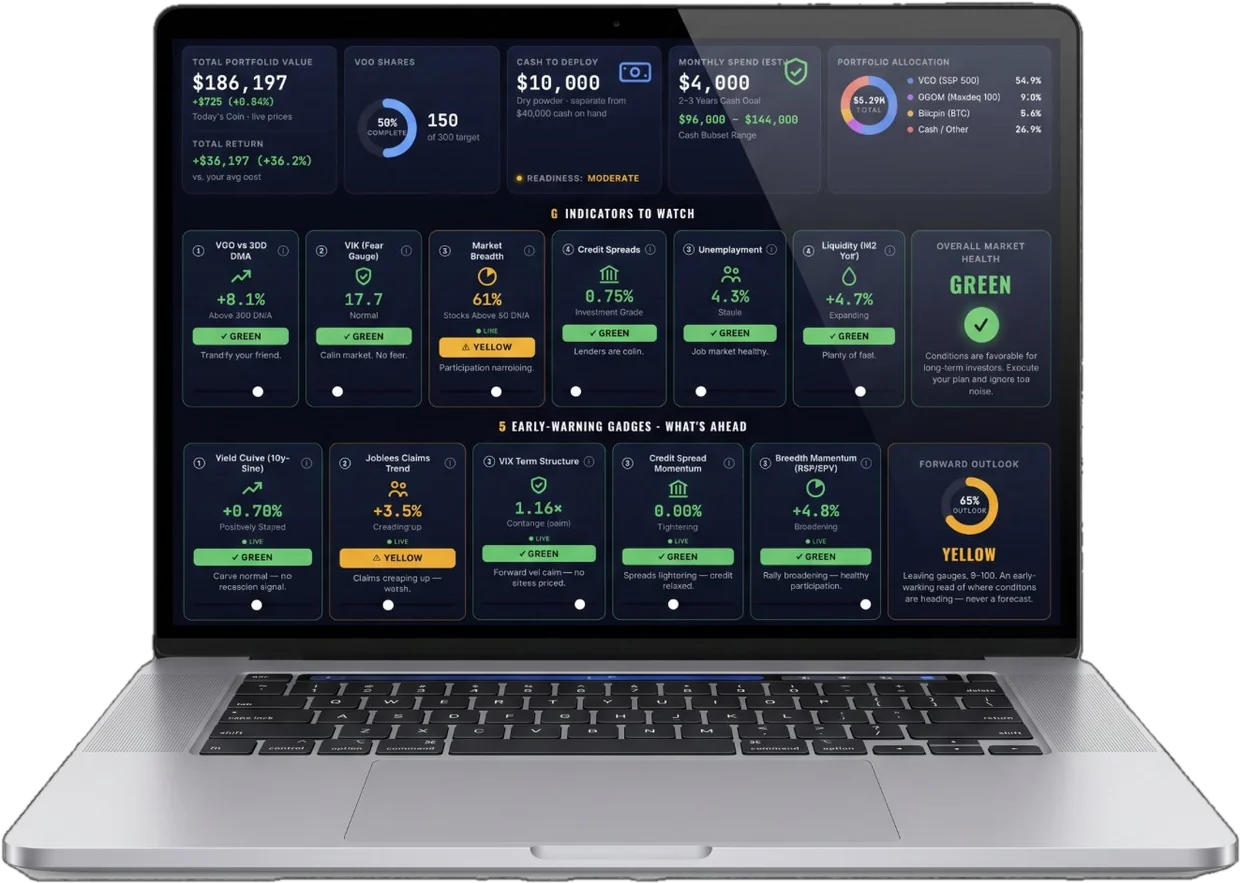
Crashes do not come from a scary headline. They come from genuine stress under the surface, credit freezing up, breadth collapsing, fear spiking and staying high. Those are exactly the signals the free Market Health Score watches.
So instead of guessing from a red ticker, look at the real condition of the market. A healthy score on a down day usually means the foundation is solid and the drop is noise. A weak, falling score is when caution is genuinely warranted.
What to do on a rough day.

- Do not panic sell. Selling into fear turns a temporary drop into a permanent loss and risks missing the rebound.
- Keep your automatic investing running. Down days are when steady contributions buy the most.
- Lean on your cash buffer, not your investments, if you need money in the short term.
- Check one honest number, then close the app. Replace the doom scroll with a single calm read.
On the scary days,
let Mr. C keep you steady.
Every day Mr. C reads the market, tells you in plain English whether it is noise or a real risk, and gives you one clear next move.
14.99 dollars per month or 149 dollars per year after the trial. Cancel anytime. No contracts.
Questions people ask.
How do I know if it is a real crash?
Look past the headline at the actual signals. The Market Health Score reads the trend, fear, breadth, credit, jobs, and money supply and tells you whether the market is genuinely under stress or just having a loud day.
Should I sell before it gets worse?
For most long term investors, no. The best days often land right next to the worst ones, so selling in fear usually locks in the loss and misses the recovery.
Is this financial advice?
No. This is educational information and Mr. C is not a licensed financial advisor. Nothing here is personalized investment advice.